2 View gallery
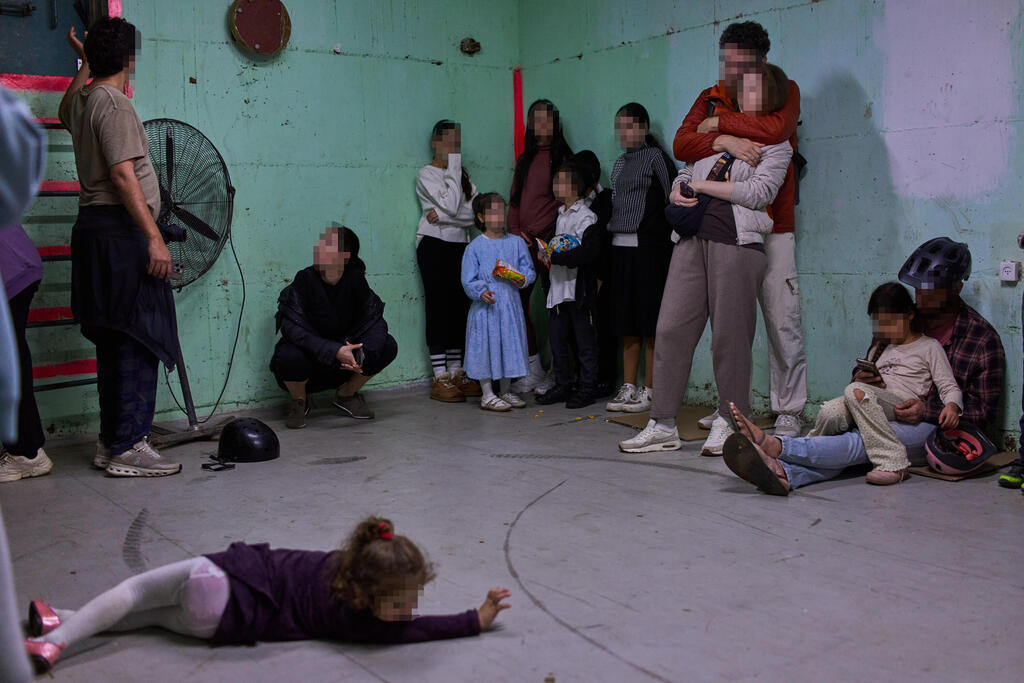
Tel Aviv shelter with sirens blaring
(Photo: AP Photo/Oded Barilti)
Her story reflects the complex reality that Israeli civilians have faced for more than two and a half years, impacting the nation’s mental health. Last weekend, Israel marked one month since the start of the second Iranian war, with more than 82,000 sirens blaring across the country and prolonged fighting on multiple fronts.
 Dr. Gilad Bodenheimer Photo: Ryan Preuss
Dr Gilad Bodenheimer, head of the Ministry of Health’s mental health division, said the term “victim of anxiety” refers to a wide range of psychological reactions to traumatic events, not just classic panic attacks. Previously, most such patients arrived at the hospital, but in recent years fewer people have sought emergency room care than in previous conflicts, including during current surgeries. “This is a positive development,” he said.
He said the goal is to help people get help through hotlines, resilience centers, on-site response and community services to reduce the burden on emergency rooms. But in the event of mass casualties, hospitals activate special protocols, such as opening stress treatment facilities like the one set up at Soroka Medical Center after the missile attacks near Arad and Dimona. At the same time, national disaster recovery teams will be strengthened and initial care will be provided in the hotels where evacuees are staying.
 Dr. Oren Tenet Photo: Tal Givoni
Dr. Oren Tene, head of the psychiatry department at Ichilov Hospital and director of the Institute of Mental Health, said that those who arrive at the emergency room are usually people who are physically injured and very anxious, or who come directly from the scene in acute distress. He said “victims of anxiety disorders” are not a homogeneous group and are treated differently. “Some people experience temporary anxiety due to an acute traumatic event, while others develop severe panic attacks due to long-term safety situations. It’s important to understand that panic attacks can occur across a variety of mental health conditions, including panic disorder, as well as OCD, post-traumatic (PTSD), and depression.”
Tenet explained that treatment for acute anxiety focuses on restoring a sense of safety and control, and pharmacotherapy is only used in a small number of cases: when anxiety persists or when anxiety interferes with sleep or function. “An important principle is not to contradict the patient’s experience. Telling them they don’t need to worry or that they should calm down is not helpful. Anxiety is a very personal experience, and such responses can be misleading to patients.”
“The main goal is to help the person understand that what they are going through is very unpleasant, but it will pass and is not dangerous,” he added. “People don’t die, pass out, or go crazy from anxiety. These are common fears, but despite the media attention, cases of anxiety-induced cardiac arrest are extremely rare.”
A panic attack is defined as an intense, often sudden wave of distress accompanied by a feeling that something bad is happening or about to happen. “Some people think, ‘I’m about to die,’ ‘I’m going to pass out,’ or ‘I’m going to lose control,'” Tene says. These thoughts are accompanied by physical symptoms and, in some cases, preceded by the attack itself. “This wave combines catastrophic thoughts with physical symptoms such as tightness in the chest, increased heart rate, difficulty breathing or swallowing, tremors, and nausea.”
He added that symptoms such as tingling in the fingers and around the mouth and cold sensations in the extremities are due to hyperventilation, an heightened state of “fight or flight” in which the body does nothing to help. Other symptoms may include depersonalization and derealization, where a person feels isolated, as if they are observing themselves from the outside or living in a movie.
Bodenheimer noted that in rare cases, anxiety attacks can cause loss of muscle control and even loss of control over bodily functions. Despite their intensity, a single anxiety attack, especially in response to trauma, is not considered an anxiety disorder with repeated episodes. She said stress responses to life-threatening events are within normal limits, but prolonged exposure to repeated trauma increases the risk of conditions such as PTSD, depression and anxiety.
Cecil Prinz, 39, from Kiryat Bialik, has been working in the mental health field for more than 10 years as a social worker and therapist for the Enosh Association, which supports people with mental health problems. She also has complex PTSD.
“I know the feeling of danger, but when there’s an actual threat, that fear is even stronger,” she says. “Every time an alarm or siren goes off, I feel extremely nervous. My heart races, I sweat, I tremble, I think I’m losing control, and I feel scared.”
She said aggression can also lead to evasion. “My mother lives in Haifa, which is not far away, but I haven’t visited her in the past month because I’m afraid of being caught by sirens on the way. My husband’s workplace has agreed to let me in, and I work in the protected space they have there. It’s the only way I can maintain my daily life.”
 Cecil Prinz Photo: Private
“Living through a time like this with such severe anxiety attacks is exhausting. It’s physically and mentally draining,” she said, stressing the importance of community support. “When someone sees you and gives you space and reaches out, even if it’s just a hug, that matters.”
Tenet stressed that panic attacks are naturally controlled. “People try to fight anxiety in every way possible, but then the body doesn’t learn that it’s a wave that goes up and down on its own. In most cases, anxiety attacks last about 30 to 40 minutes.”
Experts say one of the most important factors in coping is the presence of others. “When we’re anxious, there’s a sense of losing control, so we look for an anchor – something to hold on to, a stable person who can help us,” Bodenheimer explained.
Experts say even the presence of strangers can help. Former hostage Romi Gonen posted on Instagram last week about a severe anxiety attack he experienced on the street as sirens wailed: “Please be careful of people outside who need help.” “Since returning, I have had extreme anxiety attacks and I was alone. Thankfully, there were good people who helped me right away. Thanks to them, I was able to get through it.”
2 View gallery

Romi Gonen reveals difficulties during siren times
(Photo: Instagram)
Tene said relationships are important. “Just having someone close to you speak calmly and say, ‘I’m going to be with you until this gets better,’ just helps a lot.” Providing a simple explanation of what the patient is experiencing can also ease distress and help restore a sense of control.
The Ministry of Health recommends immediate assistance in cases of acute trauma using the Maase Model, a Hebrew acronym for a national psychological first aid approach developed by Professor Moshe Faruqi. This model includes four principles: commitment and providing reassurance. Encourage effective behavior. Ask simple, grounded questions. and structure the sequence of events. “When a traumatic event occurs, the first goal is for the person to feel safe and to feel that we are there for them,” Bodenheimer said.
“We ask simple questions that activate thinking, such as who was with you and how many people were around you, and encourage practical action. This strengthens your sense of control and competence, disconnects from numbing emotions, and reconnects with what your brain can process and organize,” he added.
In stressful situations where there is no immediate danger, Bodenheimer recommends breathing exercises, guided imagery, muscle relaxation, talking to someone nearby, listening to calming music, and even watching familiar content. “I’ve heard a lot of people lately come back to the comedies we all love, from ‘Friends’ to ‘Modern Family.’ Shows you know by heart are familiar and give you a sense of security,” he said.
Health systems are bracing for a wave of post-combat mental illness cases. “We have a comprehensive, structured plan, and we need to continue to expand,” Bodenheimer said at a news conference two weeks ago. Tene pointed out that the psychological response to a dramatic event is not always obvious at the time it occurs. Many symptoms, such as depression and OCD, do not “take into account” external circumstances and can worsen during or after war. He said more patients are experiencing worsening of their symptoms, including those who were previously stable.
#siren #feels #heart #attack #Anxiety #disorder #patients #soar #war