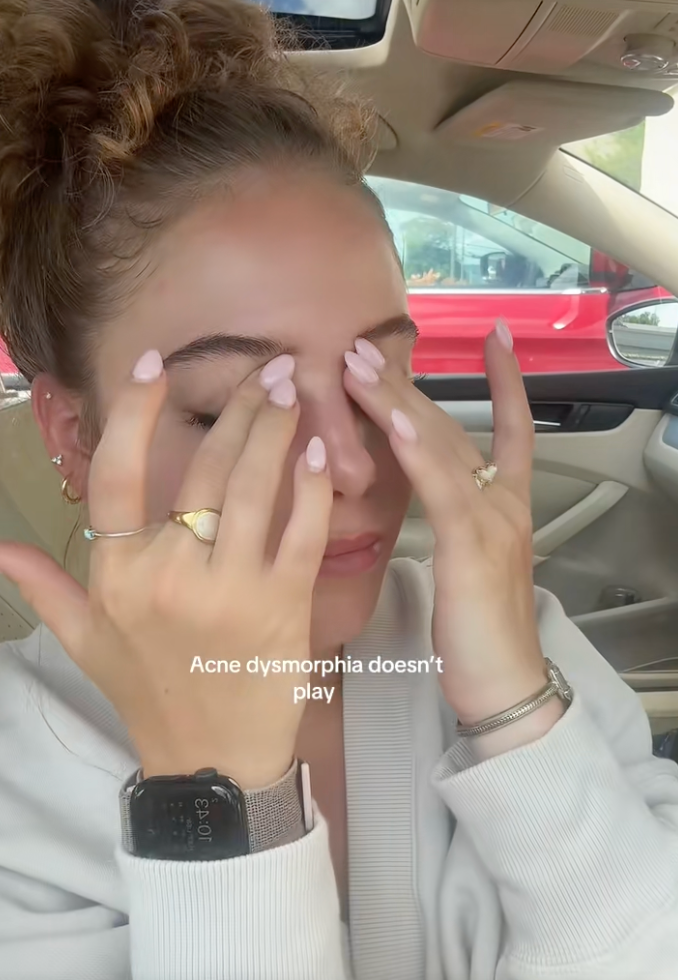
PEllie, now 44 and living in New Orleans, Louisiana, is one of many patients with skin dysmorphia, known in the United States as acne dysmorphic disorder. “Years later, a friend found an old photo of us, taken before Photoshop and filters existed, and I was blown away,” she recalls. “My skin was normal, even fair. I asked my former classmates about it, and they said they didn’t notice that my skin was bad.
“I was shocked. I always thought I would be remembered as the girl with bad acne.”
Skin dysmorphia, a condition where people look in the mirror and believe their entire face is defective, is becoming increasingly recognized. This can lead to obsessive and complicated skin care routines in an attempt to achieve the type of flawless skin commonly flaunted (thanks to filters and foundation) on social media sites like TikTok and Instagram Reels.
Signs of this condition include excessively checking mirrors, being dissatisfied with cosmetic or medical skin treatments, compulsively using or trying new products or procedures, experiencing intense emotional stress over minor or invisible skin problems, and even avoiding social situations because of the appearance of one’s skin.
This overarching illness often manifests alongside depression, anxiety, isolation, job loss and poor performance, and leaves sufferers stuck in a loop of staring at faces they hate in the mirror, tearing apart their reflections, and trying to “fix” them. Any dangerous and expensive means.
“The emotional and financial costs were enormous,” Perry says. “I’ve probably spent tens of thousands of dollars on skin care.”
Skin dysmorphic disorder patients often undergo excessive skin care that involves many procedures, the use of active ingredients, and excessive scrubbing and scrubbing, which can expose people to health risks such as scarring, irritation, sun damage, or worse.
In one case, a previously healthy 44-year-old woman suffered seizures and hepatotoxic hepatitis, which researchers concluded was caused by long-term exposure to titanium dioxide in skin care products.
Although this is an extreme case, it is not uncommon for fear of acne to cause patients to become addicted to aggressive treatments for longer periods of time than necessary.
Maddie Ogle, 22, was given 150mg of spironolactone for hormonal acne when she was 20 years old. After taking the drug (a diuretic that can cause dizziness, low energy, skin rashes, headaches, and decreased sex drive), her skin cleared up, but she was too scared to come off the drug, even though she was nearing the end of her treatment and had reduced the dose to 20 mg at this point.
“I kept having all these side effects,” she says. “But my skin was feeling good, so I thought it would be better to deal with some strange things than get depressed about acne. I had a small pimple and thought it was coming back.”
“I was glad that my mom and my boyfriend were around to tell me that I needed to worry about my health and my mental health more than my skin. I’m glad I listened to them because it was going to be okay, and it was,” she says, reflecting on her decision to go off the medication and see how her skin reacted.
It greatly affected my self-esteem and self-esteem and made me more vulnerable to abusive relationships
ashley perry
“I was just exhausted. Literally all I could think about was my skin.”
Skin dysmorphic disorder is a specific form of body dysmorphic disorder (BDD), a mental health condition in which a person becomes obsessed with imagined or subtle imperfections in their physical appearance that are often unnoticed by others. This can mean people suffering from skin dysmorphic disorder are less likely to receive the help they need. Because patients often go to dermatologists to treat perceived skin problems rather than seeking mental health support.
“The psychological effects deeply affected my self-esteem and self-worth, and made me vulnerable to abusive relationships,” Perry says of her condition.
Awareness of the condition is increasing. In January 2026, doctors Cosmetic Dermatology Journalcomprehensive assessment and management of the condition is “urgently needed”. However, it is up to the practitioner to use it.
Psychologist and mental health researcher Dr Eleanor Chatburn says she wants more communication between dermatologists, aesthetic practitioners and mental health professionals to prevent people from falling into crisis. “I previously worked with a dermatologist who was very ethical,” she says. “They test for dysmorphophobia and refuse to treat or refer people with dysmorphophobia to a psychologist. But there are also many who are willing to take money from people and offer a whole range of different treatments.”
She notes that alerting patients that they may have a mental health problem can be a difficult conversation to have. “People may still think it’s definitely a skin problem,” says Chatburn. “They go to a dermatologist or a esthetician because they want a quick external treatment. When they hear, ‘This may not heal the way you think it will,’ some people don’t come back because they really want a specific product or laser treatment. So they look for someone to sell it to them.”
Chatburn advises anyone who suspects they may be suffering from the condition to “do an audit.” Ask people around you if they spend a lot of their day checking themselves in the mirror. Ask yourself, are you spending too much money on skin care products and spending too much time on social media comparing yourself to perfect influencers? Think about how they impact your life.
Sufferers often spend less time socializing, neglect hobbies, and go out less. “There’s probably a lot of things they’re avoiding,” Chatburn says. “Sitting under bright lights or being too close to people are what we call ‘safety behaviors’ because they give patients a sense of security, but they can actually increase their attention span without realizing it.
“Also be on the lookout for signs of low mood, depression, hopelessness, and low self-esteem. I’ve heard people say, ‘Because I have bad skin, I have bad personality.’ So it gets internalized in a really, really toxic way.”
Over-purchasing skincare is more prevalent than ever. Nicola Riveros, a London-based certified nurse prescriber and cosmetic practitioner, says she often gets “terrified” by patients who come to see her with a bathroom full of 50 different chemicals. “That’s ridiculous,” she says. “We give them three things that are less toxic, and we also look at their overall health, like mental health, internal health, gut health, blood work, because all of those things are related to the skin.
“The skin is the body’s largest organ, so everything needs to be looked at. But some experts are just trying to sell a product.”
There are many people who not only sell products but also sell something else. appearance Like perfect skin. With 47.6 million videos on TikTok (and counting) with the hashtag “skincare,” it’s no surprise that a new study shows that more frequent use of the app is associated with higher rates of skin dysmorphia.
“Remember, kids have access to TikTok, Instagram, Boots, and Superdrug,” Riveros says, reminding us of Gen Alpha’s insatiable obsession with products. “It contains harmful and harsh ingredients that are dangerous to children. Pick up anything and bring it to the counter.”
If you are in distress or struggling to cope, please speak to Samaritans confidentially on 116 123 (UK and ROI), email jo@samaritans.org or visit: Samaritan Check the website for details of your nearest branch
#Skin #dysmorphic #disorder #pursuit #perfect #skin #mental #health #problem