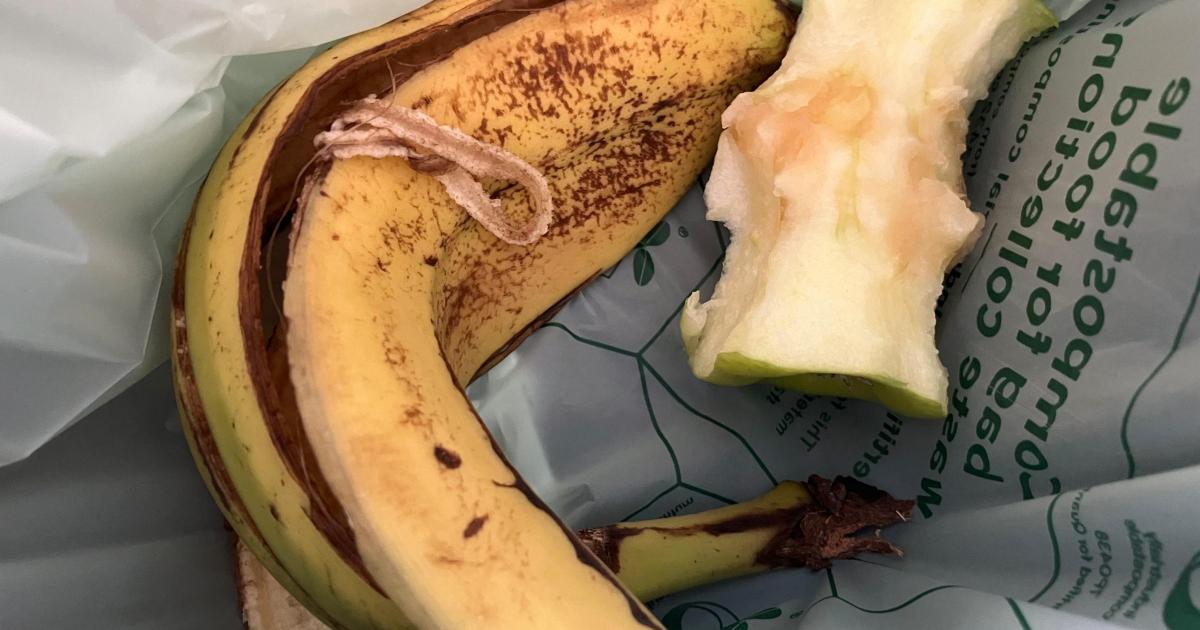
A national bin and recycling collection review launched this week means all councils in England will be required to collect food waste.
However, despite the March 31st deadline to implement these changes, many admit they will miss that deadline.
Food bin collection is not likely to be introduced in Bradford until September.
Bradford ranks fifth for food waste collected
New figures from waste management company Divert suggest Bradford could collect the highest amount of food waste in the country.
And if this waste is used to generate energy, he says, it could be a big boost for the district.
Using data from council areas that already collect food waste, Mr Dibert claims around 39,556 tonnes of food waste is collected in Bradford a year.
This puts the city in fifth place for the most food waste collected, behind Birmingham, Leeds, North Yorkshire and Sheffield.
How does food waste produce energy?
Food waste can be used to generate energy through anaerobic digestion.
The process produces biogas, which can be captured and used to generate electricity and heat, or upgraded to biomethane for use in the gas grid.
The remaining material is called digestate and can be used as fertilizer.
If the estimated 39,556 tonnes collected in Bradford were used to generate energy, 1,186,6911 kwh of energy would be generated, enough to power 4,395 homes.
However, Bradford City Council estimates that the amount of food waste it collects each year is much lower – 9,300 tonnes.
‘Huge energy generation potential’ from food waste
At a recent meeting of Bradford City Council’s Regeneration and Environment Scrutiny Committee, members were told that the authority is considering the possibility of establishing a site where food waste can be used to generate energy, but this is still at an early stage.
John Verity, Waste Management Specialist at Divert, said: “It’s important to educate people about where food waste goes and the value of separating it correctly.
“Many people are unaware of the enormous energy generation potential of food waste through anaerobic digestion, so it’s time to start approaching this topic as a viable energy source rather than just a way to dispose of waste.”
Food waste collection begins in September in Bradford
When food waste collection begins in Bradford, each household will be entitled to an internal 5-litre bin for their kitchen and an external 23-litre bin.
Trash cans will be collected once a week.
The council received £4.8 million from the government to buy 19 vehicles and tens of thousands of bins for the rollout.
However, “based on current vehicle delivery schedules,” the recall is unlikely to begin until September.
A Bradford City Council spokesperson said: “New government regulations require separate collection of food waste from all households. From September 2026, residents will need to separate their food waste into separate bins and empty them weekly.”
“As part of our plans towards this, we are exploring the potential of anaerobic digesters, which would allow us to comply with new recycling and waste regulations and turn this waste into energy and distribute it through regional networks.”
“However, no decision has yet been made by the council and no procurement commission has been signed. In the meantime, we have a temporary processing contract to process the food waste.”
“Analysis of industry standards indicates that the Bradford area expects to collect around 9,300 tonnes of food waste from 30 per cent of initial participation levels, with the potential to collect even more food waste as additional households come on board and take part.”
#Claims #food #waste #power #thousands #Bradford #homes