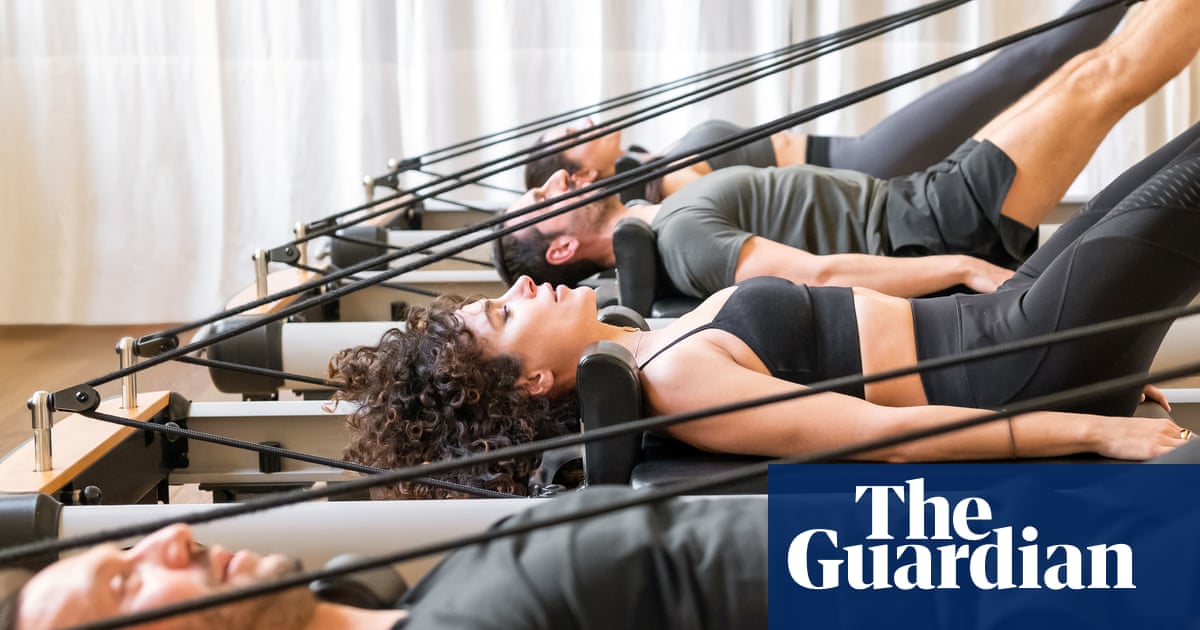
The reformer Pilates boom has created a “wild west” of studios, leading to a lack of regulation leading to more inexperienced teachers and more injuries, a professional standards body has warned.
Pilates is not formally or legally regulated, and as Pilates grows in popularity, industry experts say, reformer-based cramming classes taught by instructors with limited training have also grown.
Reformer Pilates is a low-impact full-body workout performed on a machine that uses a sliding carriage, springs, straps, and foot bars to control resistance. Its proponents claim that it strengthens, lengthens, and stabilizes muscles in ways that mat-based Pilates cannot.
Reformer classes in London cost between £20 and £37 per drop-in session, and experts say some companies are capitalizing on the trend and offering sessions under the Pilates name without sticking to traditional methods.
This has widened a divide within the industry, with traditional instructors criticizing watered-down versions while new studios argue they are simply making it easier to practice for a wider audience.
Videos on platforms such as TikTok show Pilates accidents, with footage of people falling from reformer machines frequently going viral.
Last year, Pilates teacher Kirsty Morgan, 30, from Essex, spent seven hours in A&E after a tower – a vertical metal frame attached to a reformer or wall – came loose and fell on her head during a demonstration.
“I bought it from a woman with no instructions, and she said all you had to do was put the tower in and take it out,” Morgan said. “I thought this thing was screwed in. It turns out it was actually screwed down.”
Morgan was hospitalized and received a tetanus shot and required four layers of stitches in her hairline. She was told that if a 20kg metal tower had fallen on her temple, she could have died.
Philippa Wheeler, a lawyer at law firm Leigh Day, said her firm was investigating claims against the well-known retailer in relation to Reformer Pilates machines sold in its stores.
“Reformer Pilates has become very popular in the last few years,” she said. “However, it is important that the growth of Reformer Pilates is closely tied to the safety of our participants.
“Studios must not cut corners when it comes to training teachers, purchasing equipment, and maintaining equipment. Unsafe reforming equipment and inadequate instruction on how to use it can cause life-altering injuries.”
In 2019, renowned violinist Maya Mellon suffered a fractured left elbow and abdominal injury when her unique reformer machine, the Coreformer, collapsed at her Pilates studio in London, ending her performing career. She sued the studio, and the courts largely ruled in her favor.
Pilates was developed in the early 20th century by Joseph Pilates, who combined elements of yoga, gymnastics, and modern rehabilitation techniques to create a method of movement he called “control.”
Originally designed to improve core strength, posture, and overall body awareness, Pilates gained popularity in the 1920s when it moved from Germany to New York and taught its methods to dancers and performers.
“Some people could open a Pilates studio tomorrow with little or no formal training,” said Michael King, founding member of the Society of Pilates Methods (SPM) and chair of the Pilates Steering Group at EMD UK, the national governing body for group exercise.
“While some of us work hard to maintain high standards, there are also companies operating alongside us whose instructors may not have sufficient training,” he added. “This can lead to dangerous behavior.”
King said large health club chains sometimes held reformer classes with 20 to 25 machines in a room and only one instructor. “From a safety perspective, that’s very concerning,” he added.
Anyone can call themselves a Pilates instructor in the UK without any formal training. However, reputable studios and industry organizations expect their instructors to have certifications that cover matwork and anatomy.
SPM requires “quality assurance” so that the general public can visit the studio with peace of mind. “Right now, this field can feel like the Wild West,” King said.
Sarah-Jane Walls, a qualified podiatrist and Pilates teacher based in Glasgow, said she had witnessed people falling off the machines with “traumatic injuries” and “dangerous things”.
“Other injuries we see include neck pain caused by over-mobilizing the neck muscles without using the deep core, poor head position, and lack of proper abdominal preparation,” she said.
SPM Director Lee Robinson said: “Traditionally, the UK market has had a Level 3 Pilates standard. [qualification] I focused on mat work, which has been in place since 2005. I was part of the working group that helped create it.
“However, the landscape surrounding Pilates has changed significantly. Pilates is now very much a ‘thing to do’ and further shortcuts have been taken in the meantime. Many teacher training courses are now delivered almost entirely online.” [and] Many carriers no longer require Level 3.
“Reformer classes are so popular that many clubs have in-house programs to train instructors to deliver large classes. They are simply taught how to perform a set set of exercises.”
The Pilates Teachers’ Association said: “Behind the reformer studio boom and the flashy marketing of ‘Pilates’ lies an unconscious and ignorant qualification system that is increasingly driven by commercial interests.”
#Experts #warn #Wild #West #Pilates #reform #boom #leading #increase #injuries