A Reading, Massachusetts, man was sentenced to prison for trafficking more than 100 wild animal parts from endangered and protected species. Senior U.S. District Judge F. Dennis Saylor IV sentenced Adam Beede, 40, to eight months in federal prison, followed by two years of supervised release. Beede was also ordered to pay a $75,000 fine to fund wildlife enforcement efforts. He pleaded guilty in January to two counts of conspiracy to smuggle wild animal parts into the United States and two counts of violating the Lacey Act, which prohibits the trafficking of wild animals. According to the Department of Justice, Beede conspired with poachers from Cameroon and Indonesia to buy, sell, and trade rare wildlife parts and products to customers in the United States from January 2018 to June 2021. In 2018, it was indicated that Bede was planning to contact poachers in Cameroon to discuss hunting and killing chimpanzees and gorillas. When the poachers said they couldn’t buy bullets because of the ongoing civil war, Bede offered to send them the bullets or money to buy them. One text message read, “We need something unusual for our customers.” Beede also instructed poachers not to send skulls with bullet holes. Messages between Bede and an Indonesian co-conspirator in 2021 showed Bede requesting multiple orangutan and Javan leopard skulls. Both species are considered endangered. In June 2021, federal agents seized more than 100 wild animal parts from Bede’s home in Redding. Some of the parts identified include: orangutan skull, tiger skull, leopard skin, cranium, claws jaguar skin and skull African lion skull polar bear skull narwhal tusk otter skeleton harp seal skull Golin Skull South American Fur Seal Skull Elephant Seal Skull Babirusa Skull Mandrill Skull Wallaby Skull Jackal Skull Federal wildlife laws and regulations prohibit international trade and illegal trade in vulnerable wildlife species. The Endangered Species Act (ESA), the Lacey Act, the Convention on International Trade in Endangered Species of Wild Fauna and Flora (CITES), and accompanying regulations prohibit the import, export, possession, transportation, purchase, and sale of protected species. “Trafficking the remains of endangered and protected animals is not a hobby for collectors, but a crime that facilitates the exploitation of vulnerable species around the world,” said U.S. Attorney Leah B. Foley.
A Reading, Massachusetts, man was sentenced to prison for trafficking more than 100 wild animal parts from endangered and protected species.
Senior U.S. District Judge F. Dennis Saylor IV sentenced Adam Beede, 40, to eight months in federal prison, followed by two years of supervised release.
Mr. Biedo was also ordered to pay a $75,000 fine to fund wildlife enforcement efforts.
He pleaded guilty in January to two counts of conspiracy to smuggle illegally imported wildlife parts into the United States and two counts of violating the Lacey Act, which prohibits the trafficking of wild animals.
According to the Department of Justice, Beede conspired with poachers in Cameroon and Indonesia to buy, sell, and trade rare wildlife parts and products to customers in the United States from January 2018 to June 2021.
Text messages from 2018 showed Beede planned to contact poachers in Cameroon to discuss hunting and killing chimpanzees and gorillas.
When the poachers said they couldn’t buy bullets because of the ongoing civil war, Beede offered to send them the bullets or money to buy them.
“We need something unusual for our customers,” one text message read.
Mr Beede also instructed poachers not to send skulls with bullet holes.
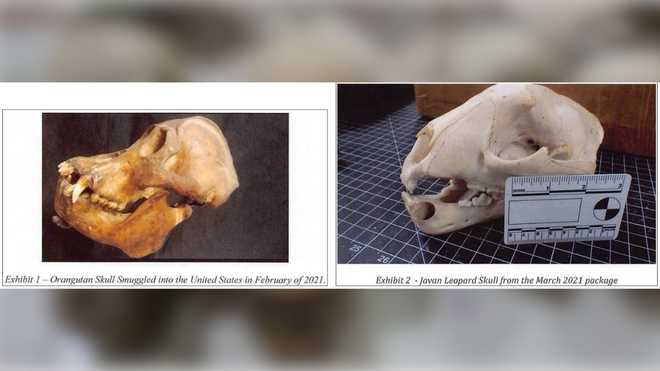
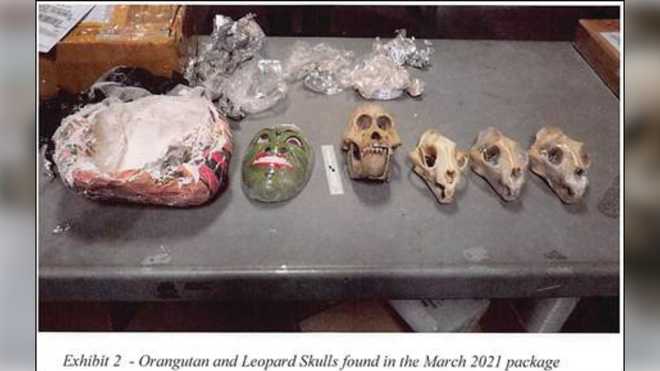
Messages between Bede and an Indonesian co-conspirator in 2021 showed Bede requesting multiple orangutan and Javan leopard skulls. Both species are considered endangered.
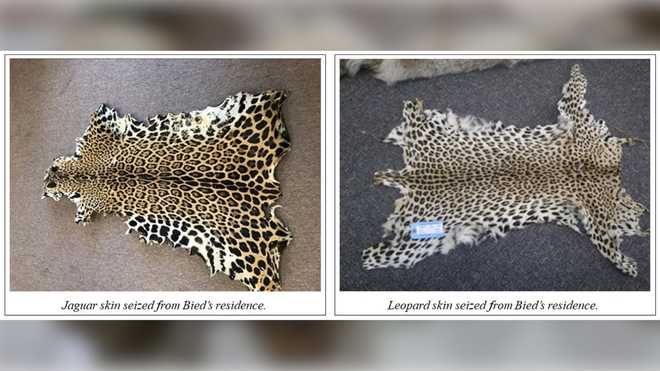
In June 2021, federal agents seized more than 100 wild animal parts from Bede’s home in Redding.
The identified parts include:
- orangutan skull
- tiger skull
- leopard skin, skull and claws
- jaguar skin and skull
- african lion skull
- polar bear skull
- narwhal fang
- Otter skeleton
- harp seal skull
- pangolin skull
- South American fur seal skull
- elephant seal skull
- babirusa skull
- mandrill skull
- wallaby skull
- jackal skull
Federal wildlife laws and regulations prohibit international and illegal trade in vulnerable wildlife species. The Endangered Species Act (ESA), the Lacey Act, the Convention on International Trade in Endangered Species of Wild Fauna and Flora (CITES), and accompanying regulations prohibit the import, export, possession, transportation, purchase, and sale of protected species.
“Trafficking the remains of endangered and protected animals is not a hobby for collectors, but a crime that facilitates the exploitation of vulnerable species around the world,” said U.S. Attorney Leah B. Foley.
#Massachusetts #man #guilty #endangered #wildlife #trafficking #case