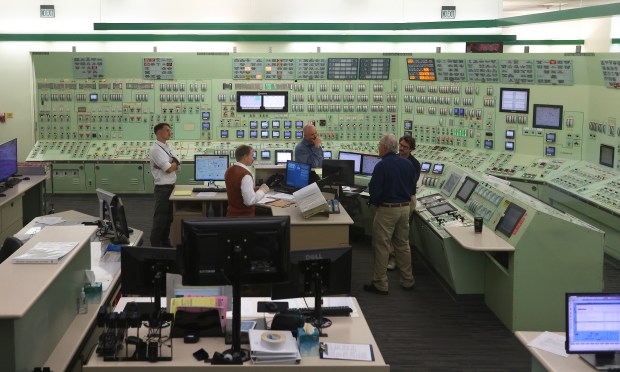
Federal regulators on Thursday renewed the license for California’s last nuclear power plant, ensuring Diablo Canyon will remain open until at least 2030, after years of debate over safety, climate goals and the state’s ability to keep the lights on.
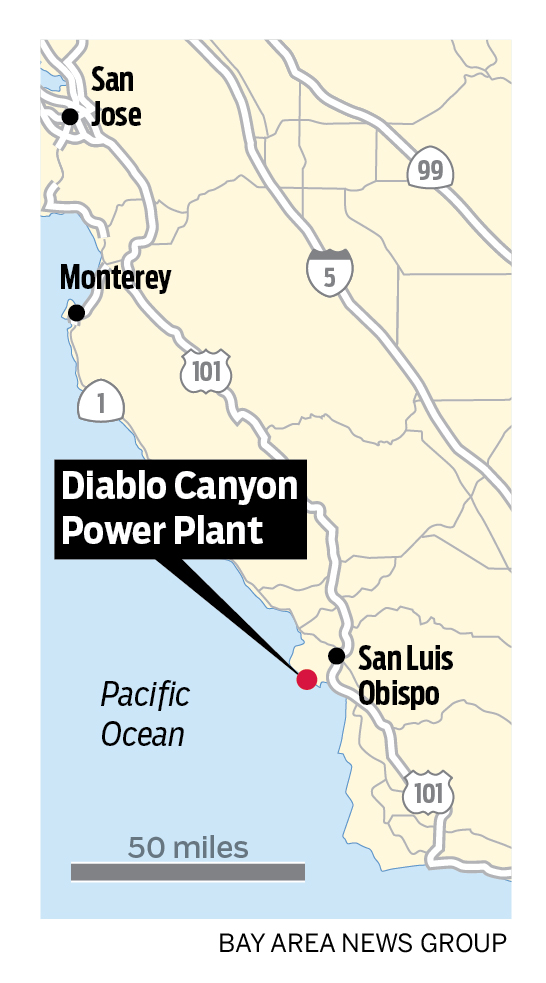
The power plant, located on the coast of San Luis Obispo County, about 320 miles south of San Jose, provides about 9% of California’s electricity – enough to power about 4 million people – but its usefulness is being debated as battery storage expands to provide the state with more reliable renewable energy.
The plant’s owner, PG&E, had planned to shut down Diablo by 2025, when its license expires. But after extreme heat waves in 2020 and 2021 strained the power grid, Gov. Gavin Newsom and state lawmakers moved to extend the plant’s lifespan in 2022. Thursday’s decision by the NRC allows that plan to move forward.
A state law signed by Newsom in 2022 directed PG&E to seek license extensions. The state also approved a $1.4 billion loan to PG&E to cover upgrade and relicensing costs, backed by a guarantee from the Biden administration.
On Thursday, the Nuclear Regulatory Commission granted Diablo Canyon a 20-year lease renewal through 2045.
“As California advances its clean energy and reliability goals, Diablo Canyon continues to be a stabilizing force on our dynamic power grid,” Jeremy Groom, acting director of reactor regulation at the Nuclear Regulatory Commission, said at a ceremony at the plant cheered by hundreds of PG&E employees. “Providing a stable source of carbon-free power during a period of rapid transition, we will support our climate change goals while ensuring the lights are on for homes and businesses across the state.”
Newsom praised the decision, calling it “essential to building a safe, affordable, and resilient future for our state.”
PG&E would need approval from the state Legislature to continue operating beyond 2030, potentially leading to a new political battle over the plant’s future.
Opponents say the extension ignores long-standing concerns about earthquake risks and the plant’s use of more than 2 billion gallons of seawater each day for cooling.
“We are disappointed and concerned,” said Haakon Williams, executive director of the anti-nuclear group Bridging the Gap Committee. “The Nuclear Regulation Authority has always been more beholden to industry than necessary. This should not be taken as a guarantee of the safety of nuclear power plants.”
Since 2020, Williams and other commentators argue that California’s rapid expansion of battery storage, which enables nighttime use of solar and wind energy, has reduced the risk of power outages.
But business leaders and energy advocates say Diablo Canyon remains important.
“As we look to grow our economy, reduce costs and take the lead on climate change, California cannot afford to lose clean, reliable, always-available power,” said John Grubb, interim president and CEO of the Bay Area Council, whose membership includes more than 350 large companies.
“This facility is doing something very important,” he added. “We keep the lights on when demand is high, when renewable energy is not enough, and when reliability is most important. This is not a theoretical thing. This is essential infrastructure.”
During the 1960s and early 1970s, PG&E proposed a number of nuclear power plants along the California coast, including Bodega Bay in Sonoma County and Davenport in Santa Cruz County. Most were never built due to local opposition.
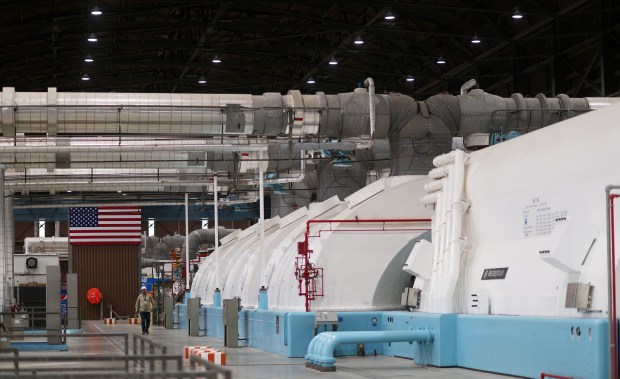
The Sierra Club helped build Diablo Canyon. At the time, leaders said nuclear power was less harmful than coal-fired power or new hydroelectric dams, especially after PG&E agreed to move the plant from the environmentally sensitive Nipomo Sand Dunes area near the Santa Barbara and San Luis Obispo county lines to a site north of Avila Beach. The controversy split the Sierra Club and led to the resignation of leader David Brower.
 After construction of the power plant began in 1968, several previously unknown earthquake faults were discovered. Lawsuits and protests involving celebrities like singer Jackson Browne, as well as research and redesign efforts delayed the opening until 1985, when the first of the two massive reactors finally came online.
Since then, there have never been any serious accidents at Diablo Canyon.
“Diablo Canyon meets the highest standards of nuclear safety and environmental protection,” PG&E Executive Vice President and Chief Nuclear Officer Paula Garfen said Thursday, noting that federal and state regulators approved the license extension, adding, “They say we’re safe and we’re green, and you can’t get any better than that.”
Blackouts and power shortages in 2020 and 2021 posed a major political risk to Newsom and Democrats who want the state to achieve 100% carbon-free electricity to combat climate change. Not only did former Gov. Gray Davis be forced out of office in 2003 amid an energy crisis, but five years ago Republicans attacked California for its lack of credibility.
“Our leaders were worried about power outages,” says Severin Borenstein, an energy economist at the University of California, Berkeley. “There was a big concern that this would set back the movement to decarbonize the power grid. This has opened up a lot of people who used to say, ‘We have to get rid of nuclear power,’ to the idea that we have to keep Diablo Canyon going.”
He pointed out that while battery storage plants have dramatically improved the situation, most can only store electricity for four hours.
“Would we make the same decision now that we made a few years ago to keep Diablo Canyon open? I don’t know,” Borenstein said. “There hasn’t been a large-scale deployment of batteries. But there are still things in Diablo Canyon that batteries can’t do.”
California once had four nuclear power plants. Humboldt Bay near Eureka closed in 1976. Rancho Seco, near Sacramento, closed in 1989. San Onofre in San Diego County closed in 2013.
No new construction is allowed under current state law. Former Governor Jerry Brown signed a bill in 1976 that prohibited the construction of new nuclear power plants in California until a permanent repository for spent nuclear waste was established by the federal government.
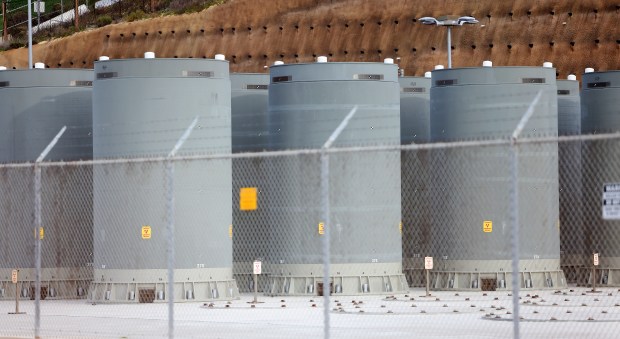
Plans to build a national nuclear waste storage facility in the remote desert of Yucca Mountain, Nevada stalled in the 1990s due to opposition from environmentalists and Las Vegas casino owners. As a result, many of the nation’s 54 nuclear power plants, including Diablo Canyon, continue to store spent nuclear fuel rods on-site that remain radioactive for thousands of years.
#Diablo #Canyon #Californias #nuclear #power #plant #receives #final #approval #continue #operating