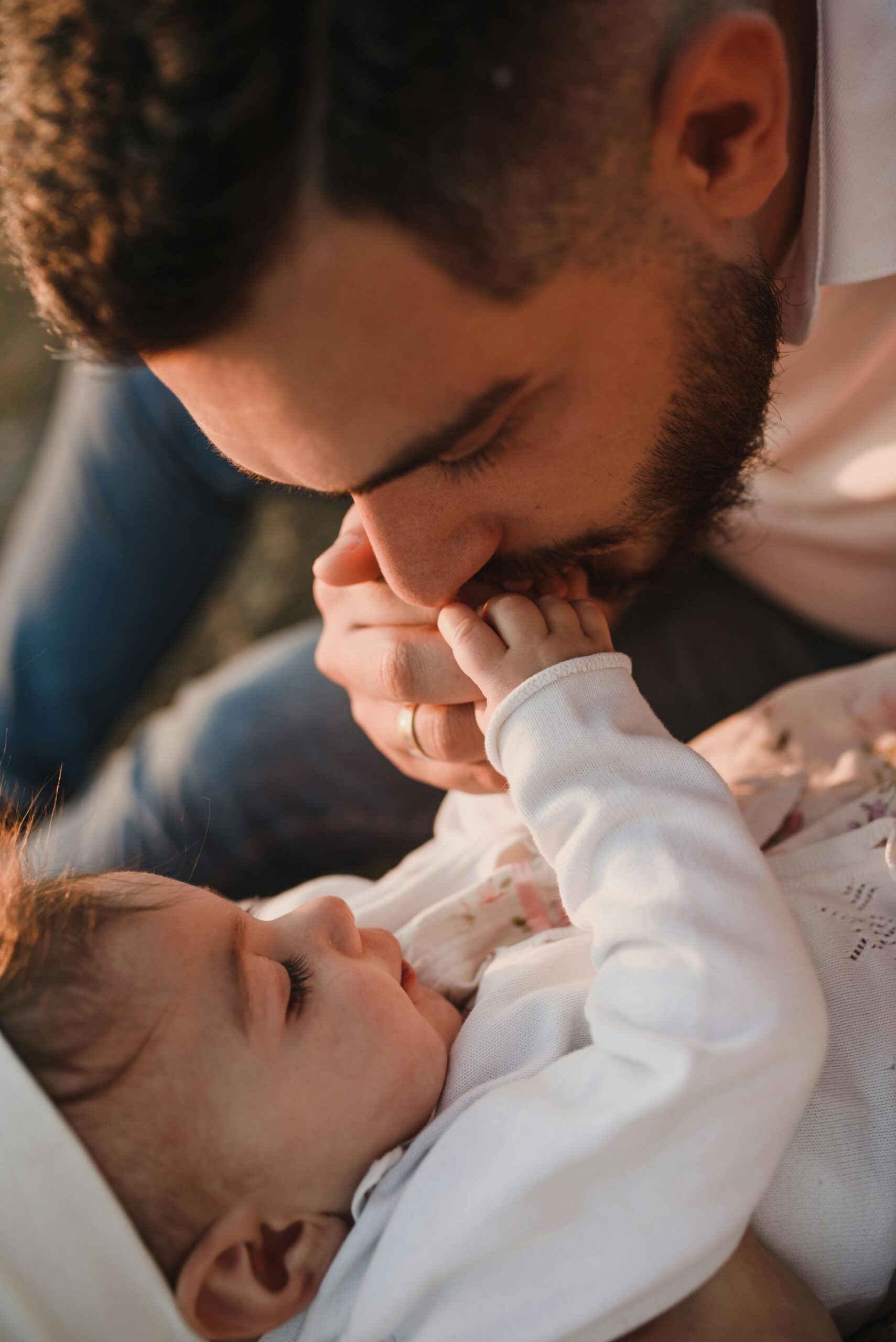
The last few decades have brought about dramatic changes in the way we parent. Today’s fathers are far more hands-on than their own fathers and grandfathers before them, changing diapers in the middle of the night, juggling work and story time, and taking precious parental leave whenever possible. When I walk around Brooklyn, New York, I see many fathers pushing strollers and playing with their children in the park. I’m sure this wouldn’t have happened a few decades ago. This evolution is wonderful in many ways.
Fathers and mothers are different and each brings unique advantages to parenting. Fathers often excel at rough-and-tumble play that fosters resilience and confidence in their children, while modeling strength, respect for authority, problem-solving, and emotional stability. Mothers, on the other hand, provide an irreplaceable nurturing nucleus. Together, they create balance. But if we really want fathers to be deeply involved, we have to take their unique challenges seriously, rather than assuming that as long as mothers and babies are okay, fathers are okay.
A groundbreaking study published just last week in JAMA Network Open makes this point clear. Researchers followed more than one million fathers in Sweden whose children were born between 2003 and 2021. What they discovered was eye-opening. A father’s risk of depression and stress-related disorders jumps by more than 30 percent toward the end of his child’s first year. actual risk decrease This may be because during pregnancy and the first few months postpartum, everyone is in survival mode and laser-focused on their newborn. Anxiety and drug-related problems return to pre-pregnancy baseline within a year. And what about depression and stress? Then they spike as the initial adrenaline wears off and the long road to fatherhood begins in earnest.
A father’s risk of depression and stress-related disorders jumps by more than 30% toward the end of his child’s first year.
Dr. Katya Moon, Medical Director of Collaborative Care Programs at Northwell Health, said it perfectly in the New York Post: “Screening fathers for mental health concerns is important, but it’s something that doesn’t happen often. Perhaps with more screening, we’d have a better chance of finding and helping fathers when they’re struggling.”
She points out that fathers often prioritize the weaknesses of mothers and babies and fall into a purely supportive role early on. That selflessness is noble, but it comes at a price. “I think it will eventually become more difficult to maintain,” she says. Fathers also lack the community that mothers enjoy, such as prenatal appointments, mom groups, and constant baby visits. No one seriously asks dad how. he Sleep and feel. We need to change that, starting at home.
However, this is not just a matter of emotion. Did you know that a man’s biology changes when he has a child? Science backs it up. Studies have shown that testosterone levels in new fathers often drop significantly, in some cases by more than 25 percent, especially among fathers who provide the most hands-on care such as eating, bathing, and playing.
Low testosterone is not a sign of weakness, but it does seem to shift a man’s priorities from competition and mating efforts to nurturing. This makes sense. After all, we are biologically designed for families, and families are biologically designed to make communities less aggressive, safer, and more unified.
Oxytocin, the “bonding hormone,” is also elevated among fathers after birth, promoting physical intimacy, emotional attunement, and the protective instincts seen when fathers scoop up hurt or crying babies. The stress hormone cortisol spikes when fathers hear their infants cry (helping them react faster) and decreases when they engage in skin-to-skin contact and play, reinforcing the positive parenting loop.
Brain imaging also reveals fathers’ neuroplasticity, or structural and functional changes in areas associated with empathy, emotional regulation, and reward processing. These changes occur through real-world father-infant interactions rather than pregnancy hormones. So fatherhood literally rewires men to be better fathers. The best version of himself for himself, his family, and his community.
But when these changes collide with sleep deprivation, financial pressures, strained relationships, and society’s expectations to “cheer up,” the result can be isolation, irritability, and full-blown depression. One study even showed a link between lower testosterone nine months after giving birth and increased risk of postpartum depression in fathers, although very high levels can also be correlated with hostility in the environment.
If we ignore this, we do ourselves a disservice.
If we ignore this, we do ourselves a disservice. As previously discussed, father involvement leads to better outcomes for children, including better academic performance, stronger emotional regulation, and lower rates of problem behavior. Children who have engaged fathers now are less likely to suffer from anxiety or delinquency in the future. A strong father-son bond can also protect a marriage. Couples who go through a transition together report higher levels of satisfaction and lower risk of divorce.
But our culture still treats fathers’ mental health as an afterthought, or even a joke. Postpartum support is overwhelmingly mother-centered (not surprisingly, in many ways mothers are facing a tsunami of hormones). However, it is not enough for a father to just say, “I understand,” and give him a pat on the back. We need practical and targeted support. These include regular mental health screenings for fathers during pediatric visits (just like mothers do), male-led support groups and apps specifically for fathers to normalize conflict, and encouraging couples counseling during major transitions. Employers could expand meaningful parental leave without stigma. Churches, neighborhoods, and extended families can build “father communities” just as we built them for mothers. For example, having a Saturday morning breakfast with other dads to share what happened that week, movies they watched, and war stories.
They also don’t realize how men’s careers are affected when they have a newborn at home. Sleep deprivation and financial strain can even affect your work environment, in some cases reducing productivity and damaging your professional identity. This can also have a significant impact on a man’s mental health.
When it comes to men, we already have problems within our feminized mental health system. We have been telling men that in order to work with this system, they must change. But the system may need to change to better accommodate men’s needs. We can do this by creating more male-led and male-focused treatment solutions – treatment solutions that fit their current situation. We must also encourage more young men to enter the field of therapy. Currently, only 20% of psychologists are men, and boys and men are paying the price.
Dr. Donghao Lu, lead author of the study, noted the urgency, saying, “The delayed increase in depression highlights the need to pay attention to warning signs of mental illness in fathers long after the child’s birth.” The first year is not just about baby milestones. It is a time when fathers quietly wrestle with the weight of providing while maintaining identity, purpose, and connection. If we help them through honest conversations, practical remedies, resources, and zero judgment, there will be more fathers, happier marriages, and more successful children.
A family where both mom and dad struggle in silence is not good for anyone, especially the baby.
But just because babyhood is over doesn’t mean you should stop supporting your father. Being a father doesn’t end when your kids grow up, nor do the struggles. Men carry the burden every step of the way. Unrelenting financial pressures, anxiety about the direction of their children’s lives, deep worries about their mental health, and constant fear of how the world will treat them. These challenges don’t magically disappear when kids turn 18.
We need real, ongoing support for men through all stages of fatherhood.
I’m not saying that we discount mothers’ challenges, and supporting fathers doesn’t mean we stop supporting mothers. These are not competing causes. Postpartum depression in mothers is real and devastating, but we have made great strides in alleviating it. Two members of my family have experienced postpartum depression, and it was truly heartbreaking. The progress we have made for mothers is worth protecting. But let’s extend that compassion to fathers, without pretending that men and women experience parenting in the same way. Biology, roles, and wiring are different, and that’s a good thing to be respected. Respecting those differences while leaving no one behind is how we build more resilient families. Both parents are important. Both deserve support. And a family where mom and dad struggle in silence is not good for anyone, especially the baby.
I believe that if we do more to support struggling men and fathers through screening, community, biology-based understanding, and cultural support, more fathers will participate and stronger families will emerge. The data backs that up. Science backs it up. And our children’s future depends on it.
#Postpartum #depression #affects #fathers #dont #talk